Drone Revolution: Unlocking the Secret to 30% Higher Crop Yield
Once upon a time, There was nothing like the drone or drone revolution, farming was all about instinct. You read the sky, felt the soil, watched the plants, and hoped the harvest gods were in your favour. Fast-forward to today, and agriculture is undergoing a massive transformation. Instead of weather-worn hands alone, farmers now rely on data, algorithms, and wait for it, drones.
Yes, those flying gadgets you once saw at weddings and in action movies are now helping farmers achieve up to 30% higher crop yields. We're talking about a new era of precision agriculture that replaces guesswork with laser-focused action.
At the heart of this revolution? Industry leaders like DJI, whose agricultural drones are turning heads and turning profits in farms worldwide. But how exactly are drones boosting yields? And why should you care?
Buckle up, because this isn’t sci-fi. This is real, and it's happening on farms near you.
Why Traditional Farming Methods Are No Longer Enough
Let’s face it: farming today isn’t what it used to be. You’re battling climate change, unpredictable rain patterns, rising input costs, and labour shortages that won’t quit. And while your grandfather's methods may have worked wonders in the past, they simply can't keep up with modern demands.
Take blanket spraying, for example. Dumping fertilisers or pesticides across an entire field without knowing exactly where it’s needed? That’s like taking antibiotics when you only have a paper cut, ineffective and wasteful. Add to that the rising cost of water, diesel, and agrochemicals, and suddenly your margins are shrinking faster than you can say “harvest.”
What’s needed is a smarter approach, a way to make decisions based on real-time, accurate data. That’s where precision agriculture comes in, and guess what makes it possible?
You got it. Drones.

Enter the Drones: A High-Tech Hero Takes Off
So, what exactly do drones in agriculture do?
More than just flying cameras, these machines are airborne data collectors, crop watchers, and even sprayers. They map your field, measure plant health, detect pests, and tell you where you’re wasting resources, all in real time.
Picture this: A DJI Agras drone takes off, scans your entire field using multispectral sensors, then returns with a treasure trove of data about which crops are thriving and which ones are crying for help. Then it flies again, this time to deliver precision spraying exactly where it’s needed.
No wasted fertiliser. No missed patches. Just laser-targeted care.
Companies like DJI are leading this charge with feature-packed agri drones like the DJI Agras T40 and Phantom 4 Multispectral. These aren’t toys; they’re tools of transformation.
The Science Behind the 30% Yield Increase
Let’s get to the meat of the matter: How are drones improving crop yields by 30%?
It’s not about magic, it's about math. Here’s how it breaks down:
- Early detection of issues: Drones can spot crop stress, diseases, and pest infestations days or even weeks before they become visible to the naked eye. That early warning lets you take action fast, saving the crops and increasing output.
- Better input management: Whether it’s fertiliser, pesticide, or water, drones ensure you only use what’s necessary where it's necessary. This means healthier plants and less waste.
- Optimised planting and harvesting schedules: With accurate topography and crop stage data, you can plan your entire farming cycle better. No more guessing when to plant or harvest.
- Reduced human error: Let’s be honest, manual labour isn’t always accurate. Drones follow programmed flight paths and spray plans, eliminating overlaps and misses.
All these tweaks may sound small, but collectively? They can translate to a significant increase in productivity and crop yield up to 30%, according to multiple agricultural tech studies and farm reports.
Drone Applications That Move the Needle
Let’s break down what these drones do that makes such a big difference:
Precision Spraying
Imagine being able to spray pesticide only where it’s needed instead of across your entire field. Drones like the DJI Agras can carry large payloads and use AI to identify specific treatment zones. That saves chemicals, cuts costs, and boosts yield by preventing unnecessary crop stress.
NDVI Imaging
This tech lets drones “see” plant health by analysing how crops reflect light. Healthy plants reflect more near-infrared light, while stressed plants reflect less. This Normalised Difference Vegetation Index (NDVI) imaging gives you a visual map of crop health so you know exactly where to act.
Automated Flight Paths
Drones don’t just fly around randomly. With GPS and RTK (Real-Time Kinematic) positioning, drones fly pre-planned routes that ensure full field coverage with centimetre-level accuracy.
Multispectral Sensors
DJI drones come equipped with sensors that capture data across multiple wavelengths, not just visible light. This allows farmers to detect problems invisible to the naked eye, like nutrient deficiencies or irrigation issues.
These applications aren't just cool, they're critical. They allow you to make informed decisions fast, reduce costs, and optimise every square inch of your farm.
Overcoming the Barriers to Entry
Let’s address the elephant in the room: “Sounds great, but isn’t all this drone tech expensive and complicated?”
Not necessarily.
Cost
Yes, a high-end DJI drone isn’t pocket change, but it’s an investment, not an expense. Consider what you save on pesticides, labour, and crop loss. Most farmers report ROI within 1–2 growing seasons.
And the prices are dropping fast. DJI now offers a range of agricultural drones that cater to small, medium, and large-scale farmers alike.
Training
Worried you’ll need a pilot’s license? Not quite. Most drone suppliers offer basic training, and many platforms come with beginner-friendly apps. DJI’s software, for instance, is surprisingly intuitive.
Regulation
Drone laws vary by country, but agriculture is one of the most supported commercial uses. Most governments now have drone-friendly frameworks in place for licensed operators, especially in the ag sector.
In short, the barriers are shrinking and the benefits are growing.
The Future of Precision Agriculture Is in the Sky
If you think today’s drones are impressive, wait until you see what’s coming. We’re talking AI-powered swarm drones that can scan, analyse, and act in real time. Imagine a network of drones detecting an outbreak, notifying you, and beginning treatment within minutes automatically. We’re also seeing drones integrate with IoT sensors, blockchain crop tracing, and predictive AI models that forecast yield months in advance.
Companies like DJI are not just building better drones, they’re shaping the future of farming. Their partnerships with agricultural software companies, cloud-based analysis platforms, and equipment manufacturers are accelerating the transition to smart farming at a global scale. This isn’t just a drone revolution. It’s a data revolution, and it’s flying straight into your fields.
Conclusion: Take Flight with Integrated Aerial Precision and Grow More
The path to a 30% higher crop yield isn’t a dream, it’s a decision. With drones leading the charge in precision agriculture, the smartest farmers are already transforming their fields into data-driven, profit-boosting operations.
But you don’t have to do it alone.
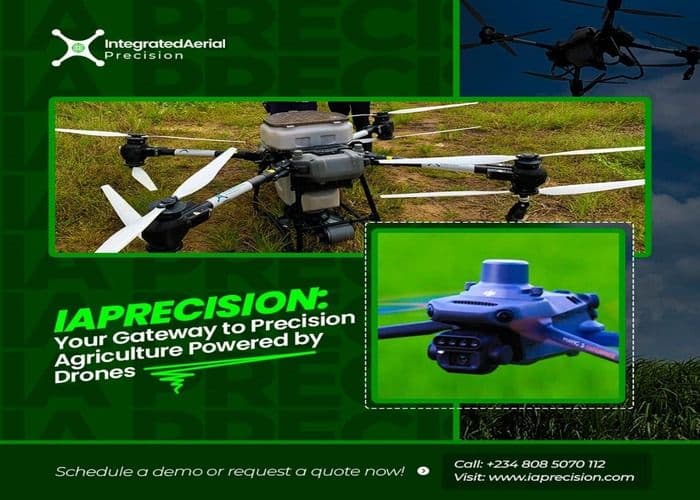
Integrated Aerial Precision is your go-to partner for next-gen farming solutions. From aerial mapping and precision spraying to crop health analytics and NDVI imaging, we deliver tailored drone services that eliminate the guesswork in agriculture.
Don’t settle for outdated methods. Boost your yield, cut input costs, and outgrow the competition with expert drone support that delivers real results.
Ready to transform your farm? Book a demo, schedule a field assessment, or speak with our precision experts today.
At Integrated Aerial Precision your yield, our mission.