Femi Adekoya at CNN 2025: Recap, Insight and Further Clarification
Femi Adekoya founded Integrated Aerial Precision, a motivating force of innovation in the Nigerian agricultural landscape. He's not just flying drones; he's cultivating a new generation of farmers, fostering sustainable practices, and helping to secure the future of food in Africa. He had an interview with CNN. Recently, his CNN interview highlights the critical intersection of technology, education, and community engagement in driving agricultural transformation
At Integrated Aerial Precision, we positioned ourselves as an innovative industry giving real differences. And when it comes to transforming the landscape of Nigerian agriculture, one name truly soars above the rest: our founder, Femi Adekoya, the visionary behind Integrated Aerial Precision (IAP), popularly known as The Flying Farmer.

Recently, The Flying Farmer sat down with CNN to share his incredible journey and the profound impact his drone technology is having on farmers across the continent. We've got the highlights, interwoven with insights we've gathered, in this exclusive interview-style deep dive.
Femi Adekoya at CNN 2025: Recap
IAP Reporter: Femi, it's truly inspiring to see your recent appearance on CNN. You told CNN, "We leverage drone technology to provide precision agriculture solutions and sustainable farming services to farmers." Can you elaborate on what that truly means for the average Nigerian farmer?
Femi Adekoya: Absolutely. When we talk about precision agriculture, we're moving away from traditional, often less efficient, farming methods. For too long, farmers have relied on manual observation, which is inherently limited. Our drones, equipped with advanced multispectral sensors, offer an "unprecedented advantage." They can detect issues that are invisible to the human eye – things like nutrient deficiencies or the early stages of pest infestations, even before they become visible problems. This early detection saves farmers immense amounts of time, labour, and valuable resources by allowing for targeted intervention. It's about working smarter, not just harder.
IAP Reporter: That sounds incredibly powerful. You also mentioned to CNN that it's "not about something new; I’m about something that makes a difference." How do these early detection capabilities translate into tangible benefits for farmers on the ground?
Femi Adekoya: The difference is profound. Imagine a farmer spending days manually inspecting acres of land for signs of disease. With our drones, we can scan the entire field in a fraction of the time, identify specific problem areas, and then apply treatments precisely where needed. This means less wastage of pesticides and fertilisers, healthier crops, and ultimately, a better yield. It's about optimising every input and ensuring the farmer gets the most out of their hard work.
IAP Reporter: It's clear the technology is groundbreaking, but you also highlighted a challenge: farmers' limited knowledge of this new technology. How are you addressing that gap?
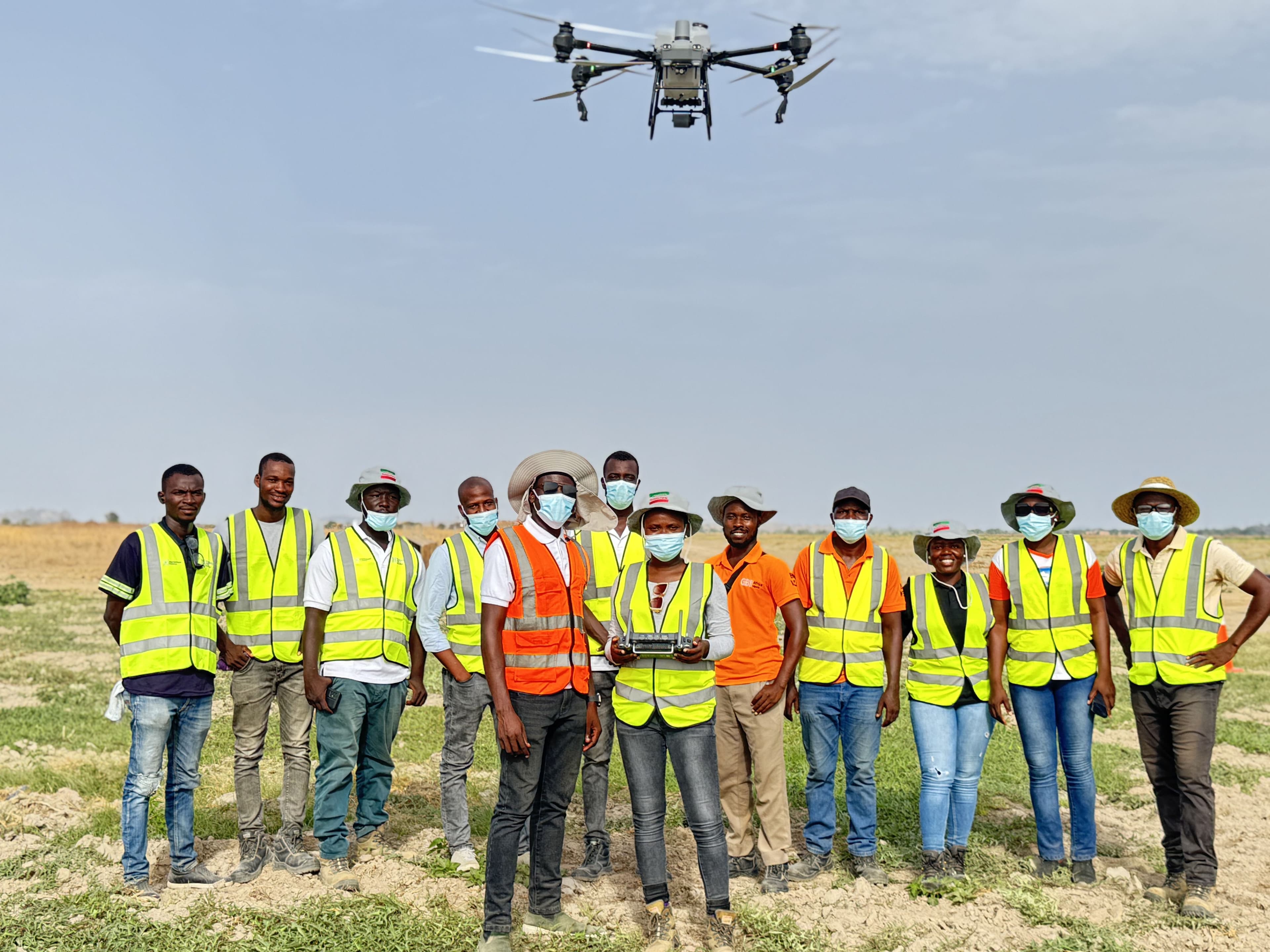
Femi Adekoya: You hit on a crucial point. This is new technology, and naturally, not every farmer has the immediate understanding or experience with it. That's why community engagement is so vital. We don't just fly the drones and leave. We go to the farm, organise "farm field days" where farmers can have a one-on-one experience with the drones, see their efficacy firsthand, and ask all their questions. Their comments and feedback are invaluable; they help us refine our services and build trust. We're not just selling a service; we're building a partnership and fostering adoption.
Femi Adekoya at CNN 2025, Further Clarification
IAP Reporter: That hands-on approach is fantastic. You also spoke passionately on CNN about youth involvement in agriculture and how drone technology can bridge a significant gap. Can you expand on that?
Femi Adekoya: This is an area I'm incredibly passionate about. There's been a trend of youth moving from rural areas to urban centres like Ibadan, leaving a labour shortage in agriculture. Drone technology offers a powerful solution to close this gap. It's transforming the perception of agriculture from a strenuous, low-tech endeavour to an exciting, innovative field. Our operators are predominantly youth – this is truly a youth-led initiative. When young people see us using drones on farms, they start to envision a different, more technologically advanced future for agriculture. This entices more youth to consider farming as a viable and rewarding career, and that's a game-changer for the sector.

Final note: Femi Adekoya at CNN 2025
IAP Reporter: It's truly inspiring to see technology not only boosting productivity but also creating new opportunities and attracting a younger generation to agriculture. Finally, Femi, you ended your CNN appearance emphasising the importance of quantity for the future of farming across the continent. Can you reiterate that message and how drone technology contributes to it?
Femi Adekoya: Food security is multifaceted; it encompasses quantity, quality, and accessibility. But we cannot effectively address quantity without thinking about farming on a larger scale, in large quantities. That directly relates to scale. Drone technology is critical for managing scalable agriculture because it saves time, provides unparalleled efficiency, ensures precision, and promotes sustainability. It allows us to manage vast tracts of land with a level of detail and effectiveness that was previously impossible. This is how we ensure abundant, quality food for everyone on the continent.